Preventing roadside deaths is vital to protecting the lives of first responders, utility workers, and everyday drivers who find themselves stopped on the side of the road.
Every year, lives are lost in entirely preventable crashes simply because passing motorists failed to move over or slow down. By following the law and staying alert, we can all play a part in making Indiana’s roads safer—for everyone.
Indiana’s Move Over or Slow Down Law
Indiana Code § 9-21-8-35 mandates that drivers must take specific actions when approaching stationary vehicles displaying flashing lights:
Emergency Vehicles: When approaching a stationary authorized emergency vehicle (e.g., police, fire, ambulance) with flashing red, red and white, or red and blue lights, drivers must:
Proceed with due caution and, if possible and safe, change lanes away from the emergency vehicle.
If changing lanes is unsafe or impossible, reduce speed to at least 10 mph below the posted speed limit.
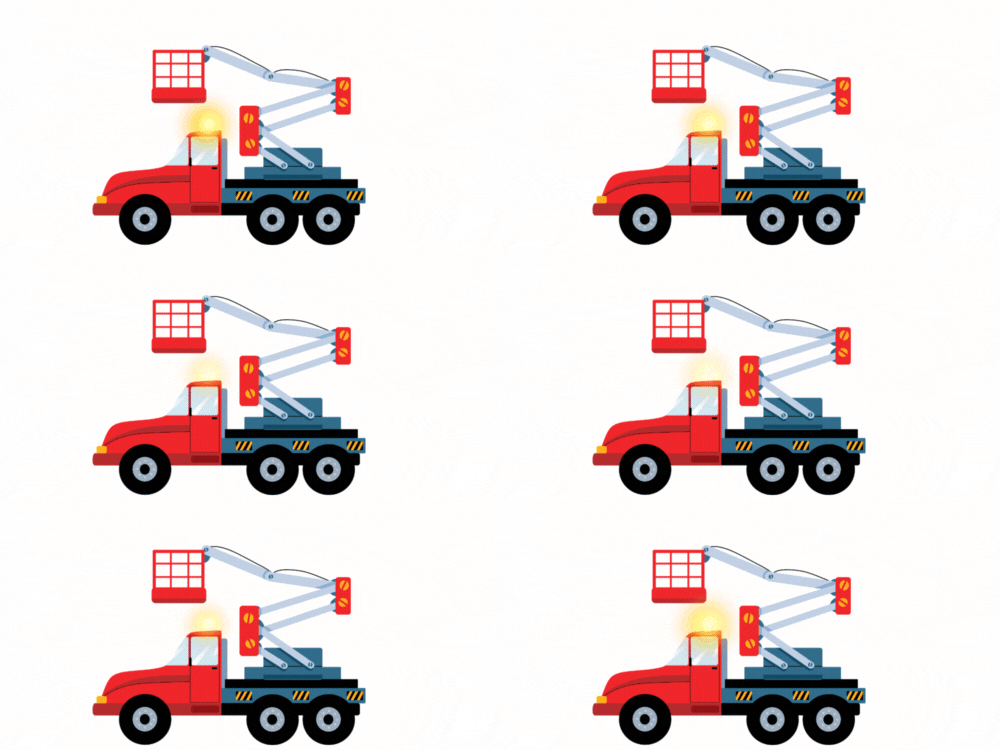
Utility and Service Vehicles: The law extends to stationary utility service vehicles, solid waste haulers, and road maintenance vehicles displaying flashing amber lights.
Drivers must exercise the same caution: change lanes away if safe, or slow down by at least 10 mph below the speed limit.
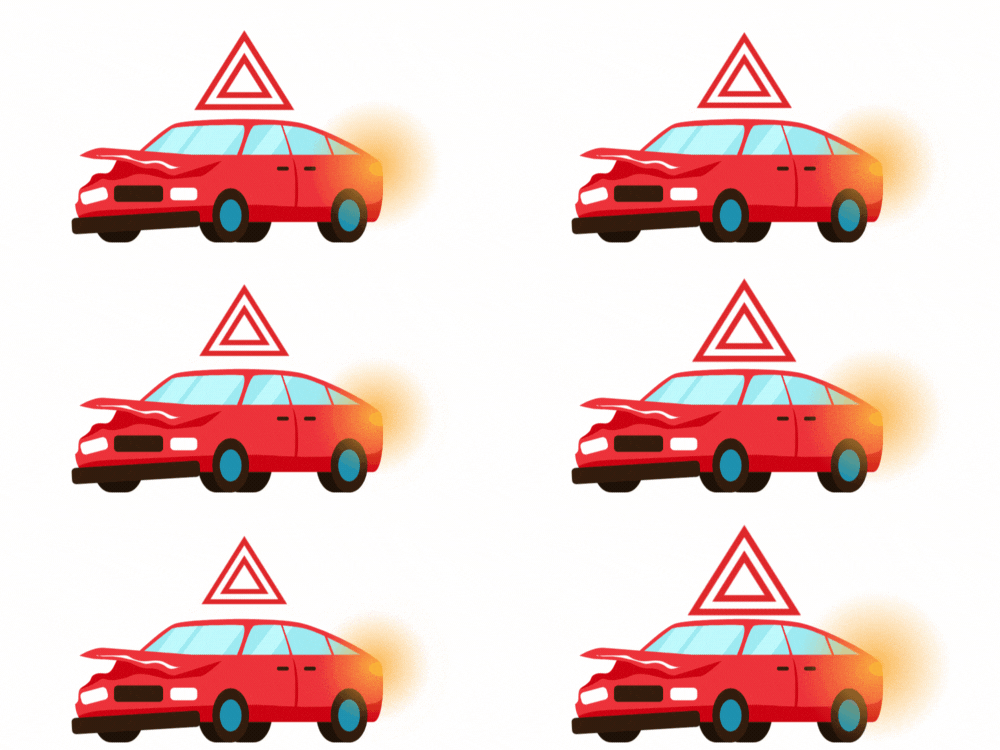
Disabled Vehicles: As of July 1, 2023, the law also includes any stationary vehicle with flashing hazard lights.
Drivers are required to move over or slow down under the same guidelines as above.
Tips for Motorists
To comply with the law and ensure safety:
Stay Alert: Continuously scan the road ahead for any stationary vehicles with flashing lights.
Change Lanes Safely: If you see a vehicle with flashing lights, and it’s safe to do so, move over to a lane not adjacent to the stationary vehicle.
Reduce Speed: If changing lanes isn’t possible, slow down by at least 10 mph below the posted speed limit while passing the stationary vehicle.
Avoid Stopping: Do not stop in the roadway near the stationary vehicle, as this can cause traffic disruptions or accidents.
Use Hazard Lights: If you need to pull over, activate your hazard lights to alert other drivers.
Work Zone Collisions in Indiana
Because work zone locations shift throughout Indiana, the counties with the highest crash rates can change year to year. In 2023, Tipton, Hancock, Boone, Lake, and Marion counties saw the highest rates of work zone collisions—putting both workers and drivers at heightened risk. These numbers are a clear reminder: no matter where you’re driving, every work zone deserves your full attention.1
Work Zone Collisions
These incidents aren’t just statistics; they represent real risks to lives and livelihoods. That’s why following posted work zone signs, reducing speed, and obeying Indiana’s Move Over law are critical steps every driver must take. Whether you’re passing through a rural road or a city street, staying alert and giving space could be the difference between a safe trip and a tragic outcome.
0
Following the Numbers
Work zone collisions in Indiana saw a significant spike in 2023, rising to 7,481 incidents—the highest number recorded in the past five years. This marks a sharp increase from just 6,364 collisions in 2022, which had been the five-year low. The upward trend highlights growing safety concerns in construction and maintenance zones across the state.